






































































































































































Table of Contents
Toggle5 Plant-Based Meals for Weight Loss: High-Fiber, Satisfying Recipes
Author: RVLNSV PRASAD
Updated On: September 2026
About Us
Author Bio
Editorial Policy
Contact Us
Introduction
Losing weight does not require eating tiny portions of plain vegetables or following a complicated diet.
For many people, the bigger challenge is finding meals that are filling, nutritious, affordable, easy to prepare, and realistic enough to repeat.
That is where plant-based meals can be useful.
A plant-based eating pattern can include vegetables, fruits, whole grains, beans, lentils, chickpeas, nuts, seeds, and soy foods. It does not necessarily mean becoming vegan. The emphasis is simply on making plant foods a major part of your meals.
Current guidance from the National Institute of Diabetes and Digestive and Kidney Diseases (NIDDK) supports eating patterns that include vegetables, whole fruits, whole grains, beans, peas, lentils, nuts, seeds, and soy foods while choosing an approach that can be maintained over time.
Research is also becoming more nuanced. A 2026 systematic review and meta-analysis of randomized trials in people with higher weight or obesity found that plant-based diets may offer modest improvements in some outcomes, but the evidence was limited and uncertain for several measures. The review found little to no difference between plant-based and comparison diets for many outcomes, while BMI and HbA1c improvements were supported by very low-certainty evidence. PubMed—2026 Systematic Review and Meta-Analysis of Plant-Based Diets
That is an important distinction.
A plant-based diet is not a magic weight-loss treatment.
Instead, plant-based meals can make it easier to build meals around fiber-rich foods, legumes, vegetables, whole grains, and other nutrient-dense ingredients.
This article shows you how to do that without turning every meal into a complicated recipe.
Quick Answer
The five plant-based meals for weight loss in this guide are
- Lentil and vegetable power bowl
- Chickpea and vegetable curry bowl
- Savory vegetable oats
- Tofu and vegetable stir-fry
- Bean and vegetable soup
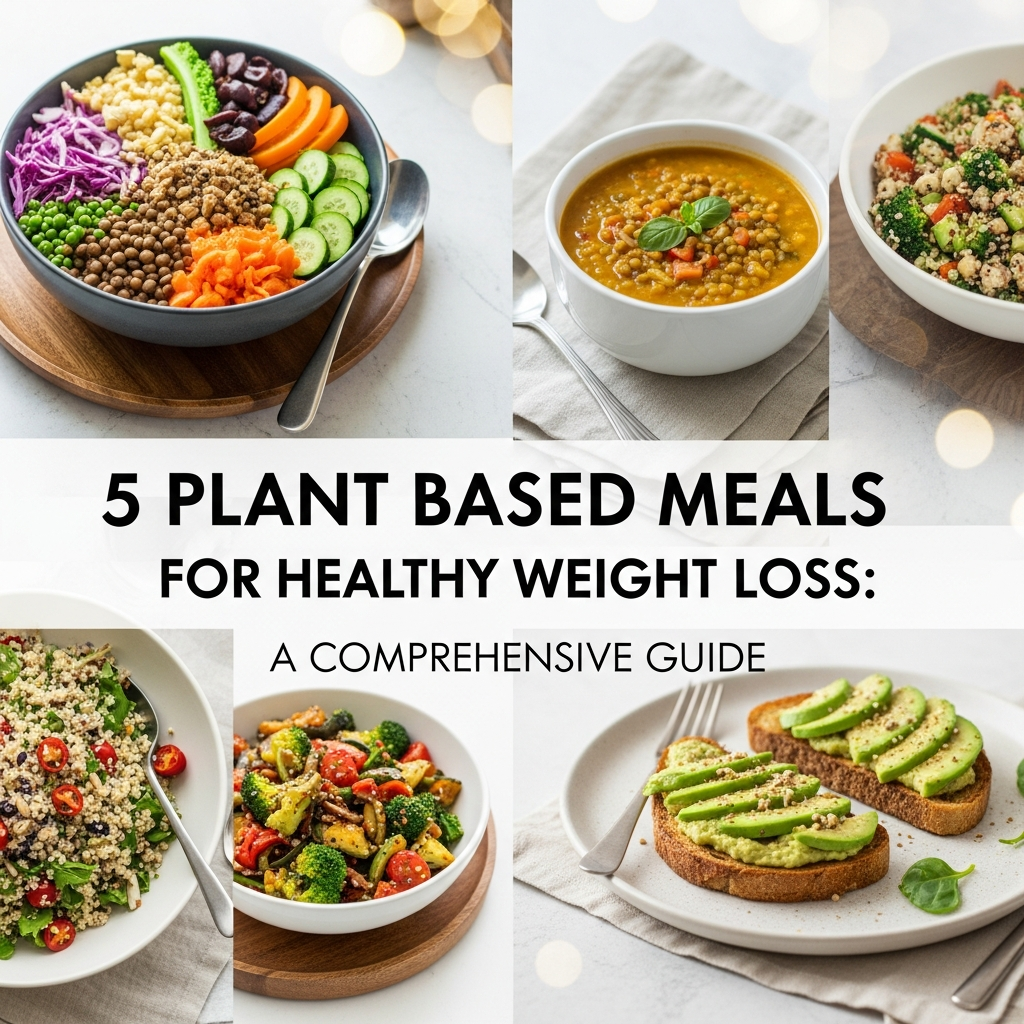
Each meal combines a plant-based protein source with vegetables and a suitable carbohydrate or whole-food ingredient.
The goal is not to eliminate carbohydrates or eat as little as possible.
The goal is to create meals that provide protein, fiber, volume, flavor, and reasonable portions.
Weight loss still depends on overall energy balance, but food quality and the ability to maintain an eating pattern matter too. Harvard’s Nutrition Source notes that calories matter while food quality and appropriately sized portions are also important for weight management. Harvard T.H. Chan School of Public Health — The Best Diet: Quality Counts
Key Takeaways
- Plant-based does not automatically mean low-calorie.
- A good weight-loss meal should contain a useful protein source.
- Lentils, chickpeas, beans, and tofu can make plant-based meals more filling.
- Fiber-rich foods can add volume and support digestive health.
- Whole grains can fit into a weight-loss diet when portions match your needs.
- Nuts, seeds, oils, and nut butters are nutritious but calorie-dense.
- You do not have to eliminate rice or roti to eat for weight management.
- Indian meals can easily be adapted into plant-forward weight-loss meals.
- The best diet is one you can realistically maintain.
- A plant-based pattern can be useful without being completely vegan.
What Does Plant-Based Eating Really Mean?
The term “plant-based diet” does not have one universal definition.
Some people use it to mean vegan eating, while others use it to describe a diet in which most meals are built around plant foods but may still include yogurt, eggs, or other animal foods.
For this article, “plant-based” means that the meal is primarily built around foods such as
- Vegetables
- Fruits
- Lentils
- Beans
- Chickpeas
- Whole grains
- Nuts
- Seeds
- Soy foods
This flexible approach can be easier for beginners than thinking in terms of an all-or-nothing diet.
WHO describes healthy diets as varied eating patterns that can include whole grains, vegetables, fruits, legumes, and nuts, while emphasizing that dietary needs and food choices can vary according to individual circumstances, culture, and local availability. WHO—Healthy Diet
That flexibility is particularly useful in India.
You do not need imported ingredients to eat more plant-based meals.
Dal, chana, rajma, vegetables, oats, peanuts, seasonal fruit, and whole grains can all contribute to a plant-forward diet.
Can Plant-Based Meals Help With Weight Loss?
They can be useful, but the reason is more practical than magical.
Many minimally processed plant foods contain fiber and water, which can add food volume without providing as many calories as some energy-dense foods.
Legumes also provide both protein and fiber.
Harvard’s Nutrition Source notes that legumes contain protein and soluble and insoluble fiber, which may contribute to fullness and make them useful foods for weight management. Harvard T.H. Chan School of Public Health — Legumes and Pulses
Vegetables and fruits can also contribute to a healthy eating pattern, although simply adding them on top of an existing diet does not guarantee weight loss. Replacing more calorie-dense foods with produce is more relevant to energy balance. Harvard T.H. Chan School of Public Health — Vegetables and Fruits
That leads to an important principle:
Plant-based meals work best for weight management when they improve the overall meal, not simply when they add more plants to it.
For example:
Large bowl of rice + vegetable side
is different from:
Moderate rice + dal + plenty of vegetables + a protein-rich food.
The second meal may provide a more balanced combination of protein, fiber, and volume.
The Plant-Based Weight-Loss Meal Formula
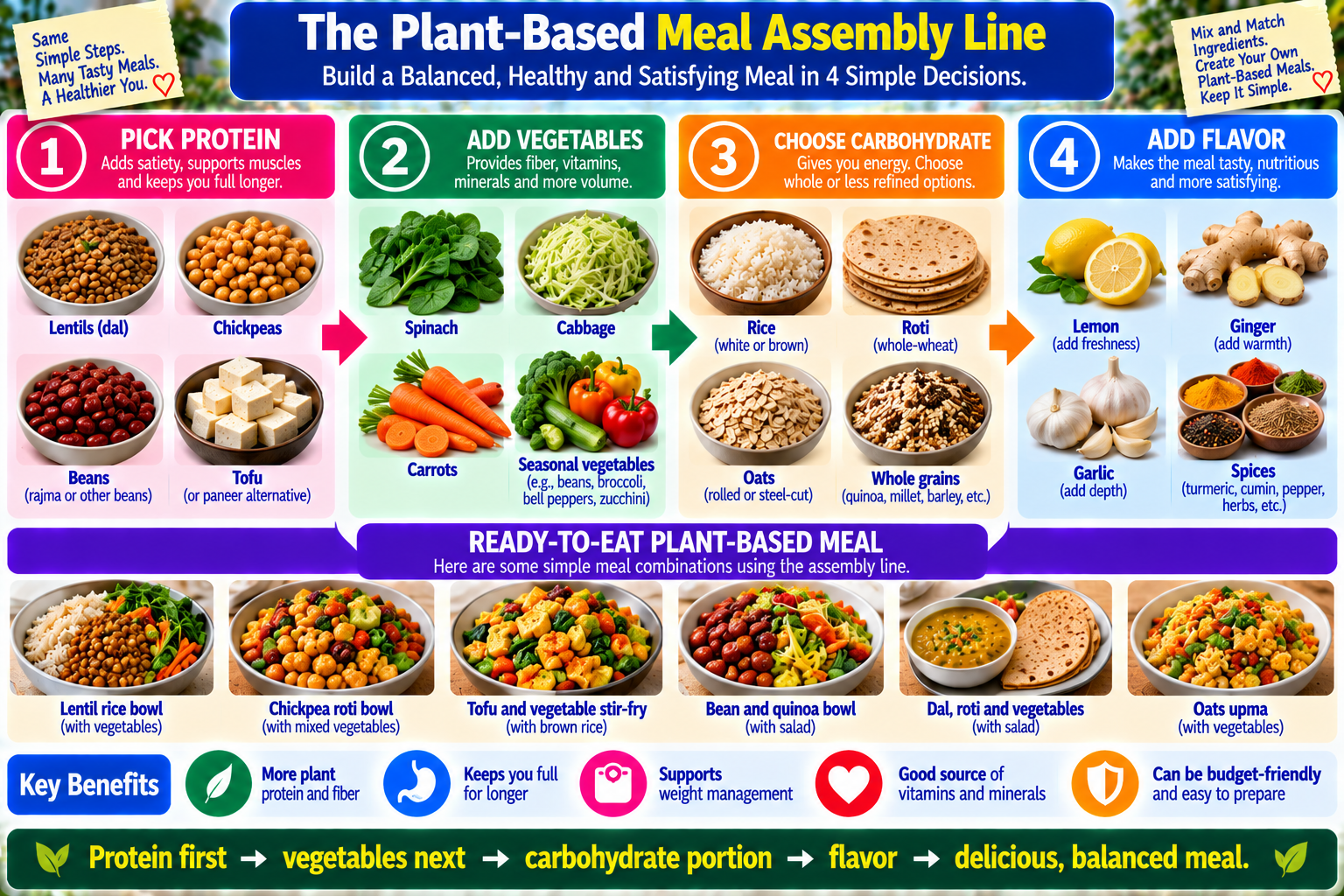
A simple formula can make meal planning much easier.
1. Start With Protein
Choose:
- Lentils
- Chickpeas
- Beans
- Tofu
- Tempeh
- Soy foods
- Peas
- Unsweetened soy products
Protein can contribute to fullness and is important for maintaining body tissues.
Harvard’s Nutrition Source notes that protein-rich foods can increase satiety and that protein sources such as beans, nuts, and other foods can fit into weight-management strategies. Harvard—Protein
2. Add Vegetables
Choose two or more vegetables when practical.
Try:
- Spinach
- Carrots
- Cabbage
- Beans
- Tomatoes
- Cauliflower
- Bell peppers
- Pumpkin
- Broccoli
- Seasonal Indian vegetables
3. Choose a Suitable Carbohydrate
You do not need to remove carbohydrates.
Options include:
- Oats
- Brown rice
- Whole-grain rice
- Whole-wheat roti
- Barley
- Quinoa
- Potatoes
- Other whole grains
NIDDK includes whole grains such as brown rice, oats, and whole-wheat foods within healthy eating patterns for weight management. NIDDK — Eating and Physical Activity to Lose or Maintain Weight
4. Add Flavor Without Turning the Meal Into a Calorie Bomb
Use:
- Lemon
- Garlic
- Ginger
- Green chilies
- Fresh herbs
- Spices
- Vinegar
- Tomato
- Small amounts of nuts or seeds
The goal is not to make food bland.
A meal you enjoy is much easier to repeat.
5 Plant-Based Meals for Weight Loss
1. Lentil and Vegetable Power Bowl
Lentils are one of the easiest ingredients to build a filling plant-based meal around.
They provide protein and fiber while working naturally in Indian cooking.
Ingredients
- ½–¾ cup cooked lentils
- 1 cup mixed cooked vegetables
- ½ cup cooked rice or another whole grain
- Tomato
- Cucumber
- Lemon juice
- Fresh coriander
- Spices of your choice
How to Prepare
Cook the lentils until tender.
Prepare the vegetables using a small amount of oil or another suitable cooking method.
Add a moderate serving of rice or another grain.
Place the lentils and vegetables together and finish with lemon, coriander, and spices.
Why This Meal Works
The meal combines:
Lentils → protein + fiber
Vegetables → volume + micronutrients
Whole grain → carbohydrate
Herbs and spices → flavor
This is more useful than simply calling lentils a “fat-burning food.”
They do not burn fat directly.
They are simply a nutritious ingredient that can help you construct a satisfying meal.
Easy Indian Variation
Turn the same ingredients into a simple dal bowl.
Use:
Dal + mixed vegetables + moderate rice + cucumber + lemon
This can be easier to prepare than a completely separate weight-loss recipe.
2. Chickpea and Vegetable Curry Bowl
Chickpeas can be an inexpensive and practical source of plant protein and fiber.
Ingredients
- ¾ cup cooked chickpeas
- 1 cup mixed vegetables
- Tomato
- Onion
- Garlic
- Ginger
- Turmeric
- Cumin
- Coriander
- ½–1 roti or a moderate grain portion
- Fresh coriander
How to Prepare
Cook onion, tomato, ginger and garlic with your chosen spices.
Add the vegetables and chickpeas.
Add water and simmer until the vegetables are tender.
Serve with a moderate portion of roti or another grain.
Why This Meal Is Different
The recipe does not depend on an expensive meat substitute.
It uses a food that is already familiar in many Indian kitchens.
Harvard’s nutrition guidance identifies beans and other legumes as useful sources of protein and fiber and notes their potential role in fullness and weight management. Harvard—Legumes and Pulses
People-First Tip
If chickpeas cause bloating, reduce the portion rather than abandoning them immediately.
Try rinsing canned chickpeas thoroughly or cooking dried chickpeas until tender.
Some people simply need a gradual increase in legumes.
3. Savory Vegetable Oats
Oats do not have to be sweet.
A savory bowl can make a quick breakfast or light meal.
Ingredients
- ½ cup oats
- ½–1 cup mixed vegetables
- Peas
- Tomato
- Onion
- Ginger
- Cumin
- Black pepper
- Water
- Small amount of oil
How to Prepare
Lightly cook the onion, tomato, and spices.
Add vegetables and cook until slightly tender.
Add oats and water.
Simmer until the oats reach the consistency you prefer.
Why Oats Fit the Plan
Oats provide dietary fiber and can be combined with vegetables to create a more substantial meal.
You can also add a protein source if the meal is not satisfying enough.
For example:
Savory oats + peas + tofu
or
Savory oats + lentils + vegetables
That is more balanced than relying on oats alone.
4. Tofu and Vegetable Stir-Fry
Tofu is useful when you want a more concentrated plant protein source.
Ingredients
- 100–150 g tofu
- 1–2 cups mixed vegetables
- Garlic
- Ginger
- Black pepper
- Low-sodium soy sauce if desired
- Lemon or lime
- Small amount of cooking oil
How to Prepare
Cut the tofu into cubes.
Cook it in a pan until lightly browned.
Add the vegetables and stir-fry until they are cooked but still retain some texture.
Add garlic, ginger, and a modest amount of soy sauce.
Finish with lemon or lime.
How to Make It More Filling
If you are still hungry after the meal, add a suitable portion of:
- Brown rice
- Whole-grain noodles
- Quinoa
- Whole-wheat roti
You do not need to turn the meal into a very low-carbohydrate dish.
The appropriate portion depends on your overall calorie needs and activity level.
5. Bean and Vegetable Soup
Soup can be particularly useful on days when you want something warm and filling.
Ingredients
- ¾ cup cooked beans
- Tomato
- Onion
- Carrot
- Spinach
- Garlic
- Ginger
- Black pepper
- Cumin
- Water or low-sodium stock
How to Prepare
Cook onion, garlic, and ginger.
Add tomato, carrot, and spices.
Add beans and water.
Simmer until the vegetables become tender.
Add spinach near the end.
Why It Can Be Practical
The meal contains:
- Plant protein
- Fiber
- Vegetables
- Fluid
- Flavor
You can also make a larger batch and use it for another meal.
However, follow safe food-storage practices when preparing meals in advance.
5-Meal Comparison Table
| Meal | Main protein | Fiber sources | Preparation | Best for |
|---|---|---|---|---|
| Lentil power bowl | Lentils | Lentils + vegetables | Moderate | Lunch |
| Chickpea curry bowl | Chickpeas | Chickpeas + vegetables | Moderate | Lunch or dinner |
| Savory oats | Oats + peas/tofu | Oats + vegetables | Quick | Breakfast |
| Tofu stir-fry | Tofu | Vegetables | Quick | Dinner |
| Bean vegetable soup | Beans | Beans + vegetables | Moderate | Light lunch or dinner |
The table is intentionally based on meal structure rather than calorie promises.
Calorie needs vary between people, and a recipe cannot be called a weight-loss meal simply because its ingredients are plant-based.
How Much Protein Do Plant-Based Meals Need?
This is one of the most important questions when planning healthy plant-based meals for weight loss.
A common mistake is building a meal around vegetables and a small amount of rice, then wondering why hunger returns quickly.
Try to identify the protein source first.
For example:
Dal + vegetables + rice
is more complete than:
Rice + vegetables
Similarly:
Tofu + vegetables + grain
may be more satisfying than:
Vegetables + grain alone
Plant-based protein sources include:
- Lentils
- Chickpeas
- Beans
- Soybeans
- Tofu
- Tempeh
- Peas
- Nuts
- Seeds
- Some whole grains
NIDDK includes beans, peas, lentils, nuts, seeds, and soy foods among protein sources that can fit into a healthy eating plan. NIDDK — Healthy Eating and Physical Activity
The Hidden-Calorie Problem With Plant-Based Eating
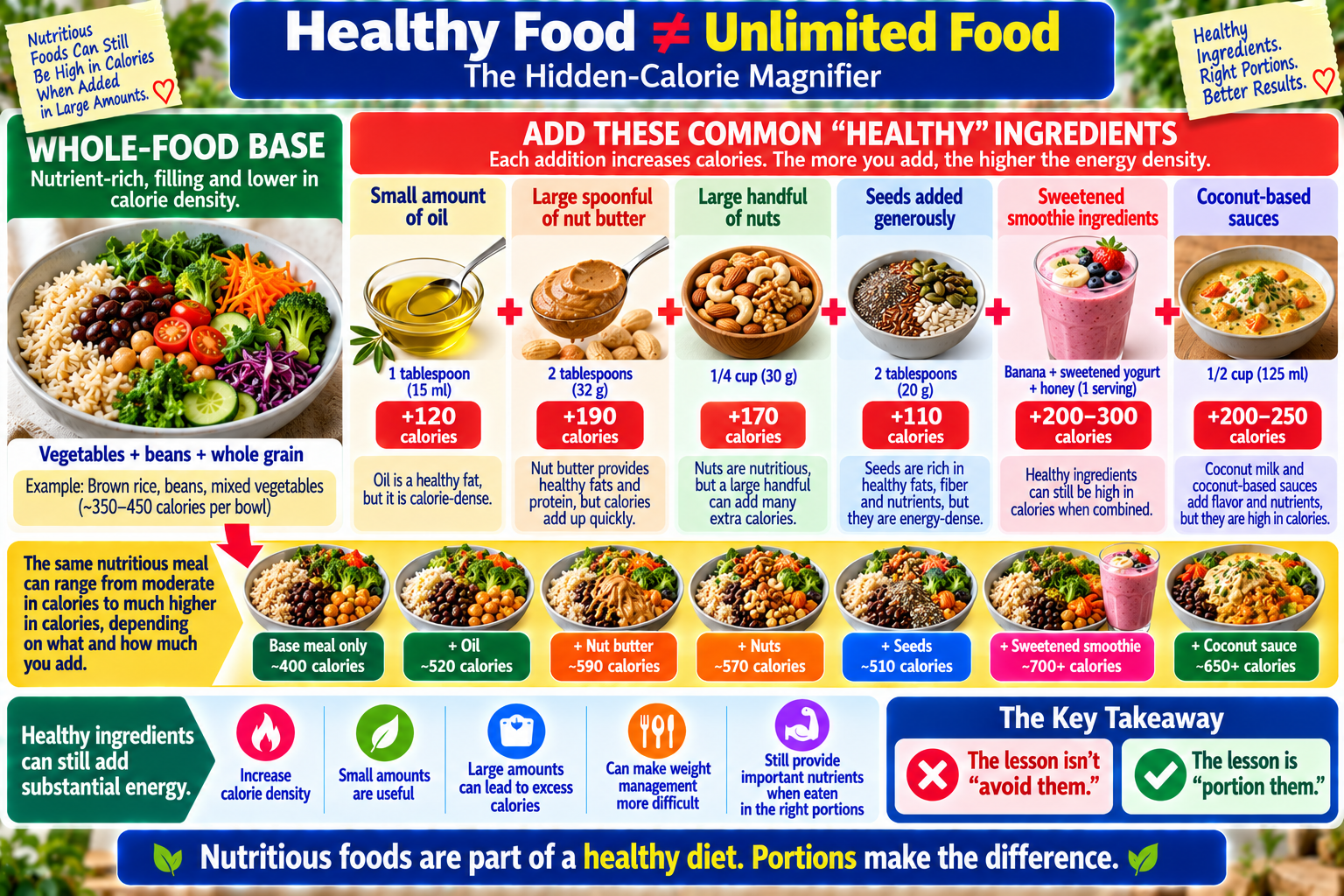
A food can be plant-based and still be calorie-dense.
Consider:
- Peanut butter
- Nuts
- Seeds
- Coconut milk
- Cooking oil
- Avocado
- Granola
- Plant-based desserts
- Fried foods
- Sweetened smoothies
None of these foods needs to be completely avoided.
The issue is portion size.
A large smoothie containing banana, oats, peanut butter, dates, seeds, and coconut milk can contain considerably more energy than someone expects.
That is why “plant-based” should never be treated as a synonym for “low-calorie.”
Harvard’s research-based guidance emphasizes both food quality and appropriate portions for weight management. Harvard T.H. Chan School of Public Health — Quality Counts
A Simple Plant-Based Plate for Weight Management
Instead of counting every calorie, you can begin with a simple visual framework.
Half the meal
Vegetables or other high-volume plant foods
About one-quarter
Plant protein such as lentils, chickpeas, beans, or tofu
About one-quarter
Rice, roti, oats, another whole grain or suitable carbohydrate
Small addition
Nuts, seeds, or cooking oil
This is not a mandatory medical formula.
It is simply a practical starting framework.
Your actual needs can vary depending on body size, activity, age, medical conditions, and goals.
Indian Plant-Based Meals for Weight Loss
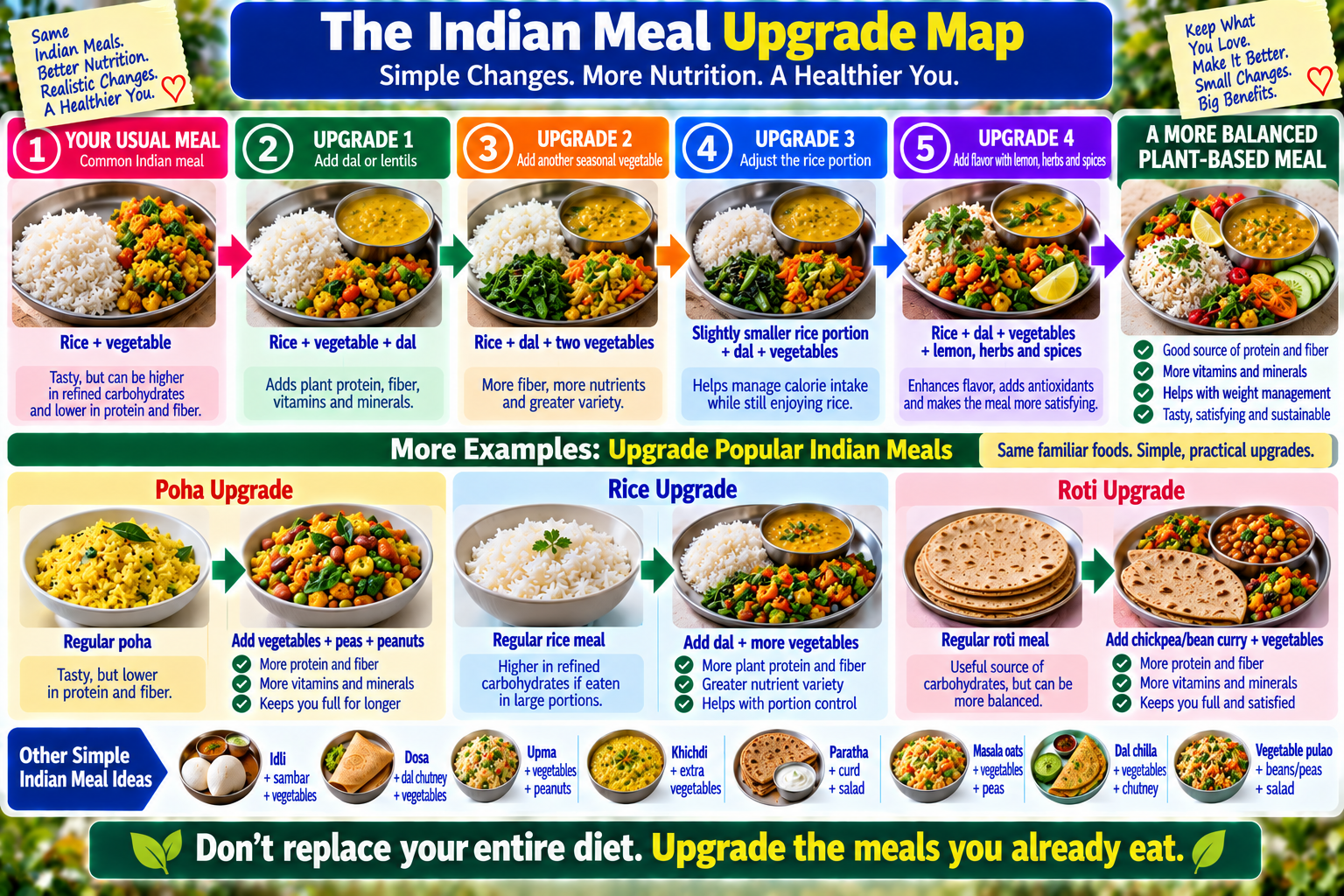
A major advantage of plant-based eating is that many traditional Indian meals already contain plant foods.
You do not need to replace them with imported recipes.
Breakfast ideas
- Vegetable oats
- Poha with vegetables and peanuts
- Vegetable upma
- Dal chilla with vegetables
- Oats with fruit and seeds
Lunch ideas
- Dal + vegetables + roti
- Chana + vegetables + roti
- Rajma + vegetables + moderate rice
- Vegetable khichdi with lentils
- Chickpea grain bowl
Dinner ideas
- Mixed vegetable soup + beans
- Tofu vegetable stir-fry
- Dal + vegetables + roti
- Chickpea vegetable curry
- Lentil soup with a suitable grain portion
WHO India specifically notes that healthy dietary patterns should reflect locally available foods and dietary customs and can include staples such as rice and wheat, legumes, vegetables, and fruit. WHO India—Healthy Diet
That is important.
Healthy eating does not need to look like a Western meal plan.
A 3-Day Plant-Based Weight-Loss Meal Plan
This is an example for meal-planning inspiration, not an individualized calorie prescription.
| Day | Breakfast | Lunch | Dinner |
|---|---|---|---|
| Day 1 | Savory vegetable oats | Lentil bowl + vegetables | Tofu stir-fry |
| Day 2 | Fruit + oats + suitable soy yogurt | Chickpea curry + roti | Bean vegetable soup |
| Day 3 | Dal chilla + vegetables | Dal + rice + vegetables | Chickpea vegetable bowl |
Snack options
Depending on your needs:
- Whole fruit
- Roasted chickpeas
- Small portion of nuts
- Plain or suitable unsweetened yogurt
- Vegetable sticks with hummus
The aim is not to eat fewer foods simply because you are trying to lose weight.
The aim is to make meals more satisfying so that your overall eating pattern becomes easier to maintain.
A Simple “One Ingredient, Three Meals” Strategy
This is one of the easiest ways to make plant-based eating practical.
Cook lentils once.
- Meal 1: Dal with vegetables
- Meal 2: Lentil bowl with rice
- Meal 3: Lentil soup
Cook chickpeas once.
- Meal 1: Chickpea curry
- Meal 2: Chickpea salad
- Meal 3: Chickpea vegetable bowl
This reduces decision fatigue and makes healthy eating easier on busy days.
It can also reduce food waste.
The 10-Minute Meal Rescue
Some days you will not have time to cook a complete recipe.
Instead of ordering whatever is easiest, use this simple rescue formula:
Ready protein + vegetable + simple carbohydrate
For example:
Cooked chickpeas + frozen vegetables + rice
or:
Tofu + leftover vegetables + roti
or:
Dal + leftover vegetables + rice
The meal does not have to look perfect.
It only needs to be nutritionally sensible and practical.
This is one of the most important people-first lessons in weight management:
The meal you can repeat is often more useful than the perfect meal you make once.
Common Mistakes
Mistake 1: Assuming Vegan Means Weight-Loss Friendly
A vegan cookie is still a cookie.
A vegan fried snack can still be calorie-dense.
A plant-based diet can include highly processed foods.
A 2026 systematic review examining ultra-processed food consumption among plant-based consumers found mixed associations with body weight and obesity outcomes, highlighting that simply labeling a diet “plant-based” does not tell us the entire story about diet quality. PubMed — Ultra-Processed Foods Among Plant-Based Diet Consumers
Mistake 2: Eating Too Little Protein
Vegetables alone may not provide enough protein for a satisfying meal.
Build the protein source deliberately.
Mistake 3: Eliminating Rice and Roti Automatically
Whole grains and staple carbohydrates can fit within healthy eating patterns.
WHO recommends varied diets that include staple foods and legumes rather than requiring people to eliminate carbohydrates. WHO—Healthy Diet
Mistake 4: Pouring Oil Freely
Oil is easy to underestimate.
A nutritious meal can become much more calorie-dense when large amounts of oil are used.
Mistake 5: Turning Fruit Into Huge Smoothies
Whole fruit is often easier to portion than a drink containing several fruits, dates, nut butter, and other calorie-dense ingredients.
Mistake 6: Changing Everything Overnight
A complete dietary overhaul may feel exciting for several days and exhausting afterward.
Start with one meal.
Then another.
Mistake 7: Expecting a Specific Weight-Loss Speed
There is no universal rate at which everyone should lose weight.
NIDDK emphasizes realistic goals and individualized weight-management plans rather than promising a particular result from one diet. NIDDK — Choosing a Safe and Successful Weight-Loss Program
My Personal Experience With Plant-Based Meals
I have found that the most useful change is not trying to make every meal “perfect.”
It is making a few meals predictable.
A simple lentil meal can be prepared without much thought.
Vegetables can be added to foods I already enjoy.
Chickpeas can be prepared in advance and used again later.
Oats can change from a sweet breakfast to a savory meal depending on what is available.
That practical flexibility matters.
Personal experience can tell me which meals are convenient and satisfying, but it cannot prove that a particular food causes weight loss.
That is why I use personal experience here as a practical perspective rather than medical evidence.
What the Latest Research Says
Research on plant-based diets and weight management has become more sophisticated.
Older discussions sometimes suggested that simply switching to plant foods would automatically lead to weight loss.
Current evidence does not support such a simple conclusion.
A 2024 review of plant-based diets for obesity management included 27 intervention trials involving 3,361 participants and six meta-analyses involving 9,168 participants. The review reported weight loss and metabolic improvements across much of the intervention evidence, but the studies varied considerably in their dietary approaches and designs. PubMed — A Review of Plant-Based Diets for Obesity Management
A 2025 systematic review examining plant-based and sustainable diets also highlighted the potential relevance of plant-focused dietary patterns to obesity, while noting variation in definitions and study approaches. PubMed — Plant-Based and Sustainable Diets and Obesity
But newer evidence also adds caution.
The 2026 systematic review of randomized trials in people with higher weight or obesity found little to no difference between plant-based and comparison diets for many outcomes and rated the certainty of evidence for some BMI and HbA1c effects as very low. PubMed — Health Effects of Plant-Based Diets in People With higher weight or Obesity
So what has changed?
The research is moving toward a more useful question:
What type of plant-based diet is being eaten, how much, for how long, and can the person actually maintain it?
That is more meaningful than simply asking whether a diet is “plant-based.”
Food Quality Matters
Harvard research guidance emphasizes that food quality matters alongside calorie intake. Minimally processed vegetables, fruits, whole grains, and healthy protein sources can form a strong foundation, while highly processed foods can make weight management more difficult when consumed frequently. Harvard — The Best Diet: Quality Counts
Legumes Remain Particularly Useful
Lentils, beans, and chickpeas provide a combination of protein and fiber.
That makes them especially practical for plant-based meals.
Harvard’s nutrition guidance notes that legumes can contribute to fullness through their protein and fiber content. Harvard—Legumes and Pulses
Physical Activity Still Matters
Food is only one part of weight management.
WHO recommends that adults perform at least 150 minutes of moderate-intensity physical activity per week, or an equivalent amount of vigorous activity, along with muscle-strengthening activity on two or more days each week. WHO—Physical Activity Recommendations
That does not mean exercise must be extreme.
Walking, cycling, strength training, and other activities can all contribute to an active lifestyle.
Plant-Based Eating and Vitamin B12
If you follow a completely vegan diet, vitamin B12 deserves particular attention.
Vitamin B12 occurs naturally in animal foods, and people who eat little or no animal foods may be at increased risk of inadequate intake. The NIH Office of Dietary Supplements explains that vegans and some vegetarians have a higher risk of B12 deficiency because natural food sources are limited mainly to animal foods. NIH Office of Dietary Supplements — Vitamin B12
This is one reason a plant-based diet and a vegan diet should not be treated as identical.
If you eat dairy or eggs, your B12 sources may differ from those of someone eating a completely vegan diet.
People following vegan diets should discuss reliable B12-fortified foods or supplementation with a qualified healthcare professional or dietitian.
Who Should Be More Careful With Weight-Loss Diets?
A general article cannot determine the right diet for everyone.
Talk with a healthcare professional or registered dietitian before making major dietary changes if you:
- Are pregnant or breastfeeding
- Have diabetes
- Have kidney disease
- Have a history of an eating disorder
- Take medications affected by dietary changes
- Have significant gastrointestinal problems
- Have recently undergone surgery
- Are underweight
- Are an adolescent
- Have another condition requiring individualized nutrition
NIDDK emphasizes that safe weight-loss programs should be tailored to a person’s health, preferences and needs. NIDDK — Choosing a Safe and Successful Weight-Loss Program
FAQ
Are plant-based meals good for weight loss?
They can be useful when they help create a sustainable eating pattern with appropriate portions, adequate protein, and plenty of nutrient-dense foods. Plant-based eating does not automatically cause weight loss.
Can I eat rice while trying to lose weight?
Yes. Rice can fit into a weight-management eating pattern. Portion size and the foods eaten alongside it matter.
For example, rice paired with dal and vegetables creates a different meal structure from a very large serving of rice eaten by itself.
Do I need to become vegan to lose weight?
No.
A plant-based eating pattern can include dairy or eggs depending on how you define it. The important factor is choosing an eating pattern that fits your health needs, preferences, and lifestyle.
Will plant-based meals keep me full?
Meals containing protein, fiber, and high-volume foods may be more satisfying than meals dominated by refined carbohydrates or calorie-dense snacks.
Lentils, beans, chickpeas, and tofu are useful options.
Are nuts good for weight loss?
Nuts can be part of a healthy diet, but they are calorie-dense.
A small portion may be appropriate, while eating large handfuls without considering total intake can make it harder to maintain an energy deficit.
Are plant-based meat substitutes healthy?
It depends on the product.
Some can provide useful protein, while others may be high in sodium, saturated fat, or refined ingredients.
Read the nutrition label and ingredient list rather than assuming every plant-based product is automatically healthy.
Can I eat plant-based meals if I am trying to build muscle?
Yes, but your total protein and energy intake need to match your training goals.
People doing resistance training may need a more deliberate protein strategy than someone simply trying to improve general diet quality.
Do I need supplements on a plant-based diet?
Not necessarily every supplement.
However, people following completely vegan diets need to pay particular attention to vitamin B12 because natural B12 sources are limited mainly to animal foods. NIH Office of Dietary Supplements — Vitamin B12
Other nutrient needs depend on the individual’s diet and circumstances.
Key Takeaways for Real Life
If you remember only a few things from this article, remember these:
Start with protein.
Choose lentils, chickpeas, beans, tofu, or another suitable plant protein.
Add vegetables.
Use whatever is affordable and available.
Keep useful carbohydrates.
Rice, oats, and roti do not have to disappear.
Watch calorie-dense ingredients.
Nuts, seeds, oils, and nut butters can be nutritious while still contributing substantial calories.
Do not chase perfection.
A simple meal repeated regularly is often more useful than a complicated recipe that you make once.
Think plant-forward rather than plant-perfect.
Your eating pattern should fit your life.
Author Note
I wrote this guide around a simple principle: healthy weight management should not require complicated food rules.
Plant-based meals can be affordable, familiar, and practical when they are built around ingredients such as lentils, chickpeas, beans, vegetables, oats, and other whole foods.
Personal experience can help identify what is convenient and satisfying, but it should not be confused with clinical evidence.
For that reason, the research claims in this article are separated from personal observations, and current evidence is described with its limitations rather than promising guaranteed weight loss.
Medical Disclaimer
This article is for general educational purposes and does not provide individualized medical or nutritional advice.
Weight loss is affected by many factors, including food intake, physical activity, sleep, medications, medical conditions, genetics, and environment.
If you have obesity, diabetes, kidney disease, gastrointestinal disease, an eating disorder, are pregnant or breastfeeding, or have another medical condition, speak with an appropriately qualified healthcare professional before making major dietary changes.
Do not use this article as a substitute for diagnosis or treatment.
Fitness Disclaimer
Physical activity can support overall health and weight management, but exercise requirements differ between people.
If you are new to exercise, start at an appropriate level and progress gradually.
People with injuries or significant medical conditions or symptoms during exercise should seek appropriate professional guidance before increasing training intensity.
Research Methodology
This article prioritizes current information from NIDDK, WHO, NIH Office of Dietary Supplements, Harvard T.H. Chan School of Public Health, and peer-reviewed research indexed in PubMed.
Recent systematic reviews and randomized trials were considered when discussing plant-based diets and weight management.
The article avoids presenting observational associations as proof of causation and avoids promising a specific amount or speed of weight loss.
The recommendations focus on practical meal construction rather than a rigid calorie prescription because individual energy needs differ.
Sources
Readers who want to examine the evidence directly can explore these resources:
- NIDDK — Eating and Physical Activity to Lose or Maintain Weight
- NIDDK — Choosing a Safe and Successful Weight-Loss Program
- WHO—Healthy Diet
- WHO India — Healthy Diet
- WHO—Obesity and higher weight
- WHO—Physical Activity
- NIH Office of Dietary Supplements — Vitamin B12
- Harvard T.H. Chan — The Best Diet: Quality Counts
- Harvard T.H. Chan — Legumes and Pulses
- Harvard T.H. Chan — Protein
- PubMed—2026 Plant-Based Diets in People With higher weight or Obesity
- PubMed — Review of Plant-Based Diets for Obesity Management
- PubMed—2025 Plant-Based and Sustainable Diets and Obesity
- PubMed — Ultra-Processed Foods Among Plant-Based Diet Consumers
Conclusion
The best plant-based meals for weight loss are not the meals with the fewest calories or the most impressive health claims.
They are meals that give you a practical combination of protein, fiber, vegetables, useful carbohydrates, and appropriate portions.
Lentils can become a satisfying bowl.
Chickpeas can become a curry.
Oats can become a savory breakfast.
Tofu can become a quick stir-fry.
Beans can become a simple vegetable soup.
These foods do not need to be presented as fat-burning ingredients.
They are useful because they can form the foundation of a nutritious eating pattern.
Current evidence suggests that plant-based diets can be a reasonable option for people seeking weight management, but research does not support treating every plant-based diet as automatically superior or guaranteed to produce weight loss. The quality of the food pattern, total energy intake, adherence, and individual circumstances all matter.
WHO similarly emphasizes varied diets containing vegetables, fruits, legumes, whole grains, and nuts while recognizing that healthy eating needs to fit individual and cultural circumstances.
So you do not need to completely change your diet tomorrow.
Start with one meal.
Make the protein source deliberate.
Add vegetables.
Keep portions realistic.
Use foods you can actually afford and prepare.
Then repeat the process until healthy eating becomes ordinary rather than difficult.
That is the real goal of plant-based meals for weight loss: not a temporary food trend, but a practical eating pattern that you can continue while supporting your health and weight-management goals.
Related Articles
- 14 Ways to Increase Protein Intake Daily Tips
- 4 Week Diet Plan for Weight Loss
- 12 Best Diets to Lose 100 Pounds
- High Protein Vegan Diet for Weight Loss
- Best Weight Loss Nutrition
- Weight Loss Category
- Home
Post Views: 2,064











[…] 5 Plant Based Meals for Healthy Weight Loss: A Comprehensive Guide […]
[…] 5 Plant Based Meals for Healthy Weight Loss: A Comprehensive Guide […]
[…] 5 Plant Based Meals for Healthy Weight Loss: A Comprehensive Guide […]
[…] 5 Plant Based Meals for Healthy Weight Loss: A Comprehensive Guide […]
[…] 5 Plant Based Meals for Healthy Weight Loss: A Comprehensive Guide […]
[…] 5 Plant Based Meals for Healthy Weight Loss: A Comprehensive Guide […]
[…] 5 Plant Based Meals for Healthy Weight Loss: A Comprehensive Guide […]
[…] 5 Plant Based Meals for Healthy Weight Loss: A Comprehensive Guide […]
[…] 5 Plant Based Meals for Healthy Weight Loss: A Comprehensive Guide […]
[…] 5 Plant Based Meals for Healthy Weight Loss: A Comprehensive Guide […]
[…] 5 Plant Based Meals for Healthy Weight Loss: A Comprehensive Guide […]
[…] 5 Plant Based Meals for Healthy Weight Loss: A Comprehensive Guide […]
[…] 5 Plant Based Meals for Healthy Weight Loss: A Comprehensive Guide […]
[…] 5 Plant Based Meals for Healthy Weight Loss: A Comprehensive Guide […]
[…] 5 Plant Based Meals for Healthy Weight Loss: A Comprehensive Guide […]
[…] 5 Plant Based Meals for Healthy Weight Loss: A Comprehensive Guide […]